Belfast Travel Guide: Everything You Need to Know Before Your Visit

Updated: Jul 31
If you are planning a trip to Northern Ireland, this Belfast travel guide will help you organise your visit and answer the most common questions before you arrive.
Northern Ireland’s capital is a city full of contrasts: a place where industrial heritage, Victorian architecture, live music, local food, unique neighbourhoods and a fascinating recent history all come together.
Before travelling, many visitors have questions:
Is Belfast part of Ireland or the United Kingdom?
What currency is used in Belfast?
Do I need a passport or special travel authorisation?
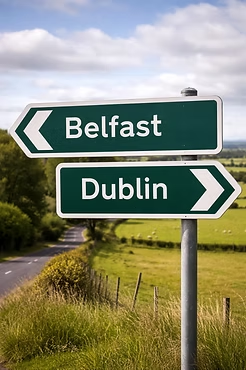
How do I get from Dublin to Belfast?
What is the best time of year to visit?
Is Belfast safe for tourists?
In this guide, you will find all the practical information you need to plan your trip and enjoy Belfast with confidence.

🌍 Is Belfast Part of Ireland or the United Kingdom?
One of the first things many travellers want to understand is the political situation of the island of Ireland.
The island is divided into two territories:
👑Northern Ireland, where Belfast is located, is part of the United Kingdom.
☘️The Republic of Ireland, home to cities such as Dublin, Galway and Cork, is an independent country.
Although both areas share history, culture and strong connections, there are some important differences visitors should be aware of:
The official currency.
Entry requirements.
Certain laws and public services.
Today, the border between Northern Ireland and the Republic of Ireland is practically invisible to travellers. There are no physical border controls when travelling between Belfast and Dublin.
💷 Currency and Payments in Belfast
The official currency in Northern Ireland is the British pound (£, GBP), as Northern Ireland is part of the United Kingdom.
In Belfast, you can pay by card almost everywhere:
✅ Restaurants.
✅ Hotels.
✅ Shops.
✅ Pubs.
✅ Public transport.
Visa and Mastercard are widely accepted throughout the city.
Can you use euros in Belfast?
Although some businesses may accept euros occasionally, this is not common.
If you are travelling from the Republic of Ireland, remember that Dublin uses euros (€), while Belfast uses pounds (£).
💡 Tip: If you are visiting Belfast from Dublin, paying by card is usually the easiest option and avoids unnecessary currency exchange.
Northern Irish banknotes
Northern Ireland has its own banknotes issued by local banks.
These are official pound sterling notes, but some travellers find that they can be difficult to use outside Northern Ireland.
💡 Tip: If you are continuing your journey through England, Scotland or Wales, it may be easier to use Bank of England notes.
✈️ How to Get to Belfast
Belfast has two main airports:
Belfast International Airport (BFS)
This is the largest airport in Northern Ireland and handles most international flights.
It is located around 30 kilometres north-west of Belfast city centre.
From here, you can reach the city by:
Airport Express 300 bus.
Taxi.
Hire car.
George Best Belfast City Airport (BHD)
This is the closest airport to Belfast city centre.
It is especially convenient if you are arriving from other cities in the UK or Ireland.
From here, the city centre can be reached within a few minutes.
🚆 How to Travel from Dublin to Belfast
Many visitors combine both cities during their trip around the island of Ireland.
The distance between Dublin and Belfast is around 170 kilometres.
The main options are:
🚆 Train
A comfortable option with beautiful scenery along the way.
Services connect:
Dublin Connolly Station.
Belfast Grand Central Station.
Belfast Lanyon Place (depending on the service).
Journey time: approximately 2 hours and 10 minutes.
🚌 Bus
Usually the cheapest option.
There are frequent services from Dublin city centre and Dublin Airport.
Journey time: around 2 to 2.5 hours.
🚗 Car
A great option if you want the freedom to explore Northern Ireland.
The main route is the M1 motorway, and the journey usually takes around 2 hours without heavy traffic.
👉 You can read our complete guide on how to travel from Dublin to Belfast by train, bus or car.
🚌 Getting Around Belfast
One of the great advantages of Belfast is that it is an easy city to explore.
The historic city centre is compact, and many of the main attractions can be reached on foot.
For longer distances, Belfast has an extensive public transport network operated by Translink.
🚌 Metro buses
The urban bus network connects the main areas of the city.
🚍 Glider
A rapid bus service connecting east and west Belfast.
🚆 Local trains
Useful for visiting places outside the city centre.
💡 Tip: For a first visit, walking is often the best way to discover Belfast. The city is full of historic buildings, hidden details and interesting corners that you might miss when travelling by vehicle.
🚗 Is It Worth Hiring a Car?
If you're only planning to visit Belfast, you probably won't need a car.
The city is compact, easy to explore on foot and well served by public transport.
However, if you'd like to discover more of Northern Ireland, hiring a car is one of the best options. It gives you the freedom to visit places such as:
🏰 Dunluce Castle
🌿 The Antrim Coast
⛰️ Northern Ireland's countryside and scenic routes
One important thing to remember:
🚘 In Northern Ireland, people drive on the left-hand side of the road.
🛂 Passports, Visas and Entry Requirements
Northern Ireland is part of the United Kingdom and is not part of the Schengen Area, so entry requirements differ from those for the Republic of Ireland.
Depending on your nationality:
You may need a passport to enter the UK.
Some travellers are required to obtain an Electronic Travel Authorisation (ETA).
Others may also require a visa.
👉 Always check the latest entry requirements before travelling, as they vary depending on your nationality. You can find the latest official guidance on the UK Government website.
If you're travelling from Dublin to Belfast, it's worth remembering that although there are no physical border checks, you are technically crossing from one country into another.
👌 Belfast Travel Guide: Practical Information Before Your Visit
🗣️ What Language Is Spoken in Belfast?
English is the main language spoken throughout Belfast.
Although Northern Ireland also has communities where Irish (Gaeilge) and Ulster Scots are spoken, everyday life in Belfast is conducted almost entirely in English.
One thing many visitors notice straight away is the local accent.
The Belfast accent can be quite different from the standard British English heard in films or language courses, and it may take a little time to get used to.
Don't worry though, local people are generally very friendly and are happy to slow down if they realise you're having trouble understanding them.
🔌 Plug Sockets and Electricity
Northern Ireland uses the same electrical system as the rest of the United Kingdom.
🔌 Plug type: Type G
⚡ Voltage: 230V
The sockets have three rectangular pins, so travellers from many countries will need a plug adaptor.
💡 Tip: If you're travelling around the whole island of Ireland, you'll only need one adaptor, as the Republic of Ireland also uses Type G sockets.
💷 Tipping in Belfast
Unlike in some countries, tipping is appreciated but not expected.
Generally speaking:
🍽️ Restaurants
Leaving around 10–12% for good service is common, although it's entirely optional. Some restaurants automatically include a service charge, particularly for larger groups.
🍺 Pubs
There's no expectation to tip when ordering drinks at the bar.
🚕 Taxis
Rounding up the fare or leaving a small extra amount is common, but not required.
💡 Tip: Always check your bill first to see whether a service charge has already been added.
🛍️ Shopping Hours
Opening hours vary depending on the business, but as a general guide:
🛒 Shops and shopping centres
Monday to Saturday: usually 9:00 am – 6:00 pm
Many shops also open on Sundays with reduced trading hours.
🍽️ Restaurants
Most open from lunchtime until the evening, although some kitchens stop serving earlier than visitors from southern Europe may expect.
🍺 Pubs
Many pubs open from late morning or midday.
Most close around midnight, although some stay open later at weekends.
💡 Tip: If you're planning to visit museums or go shopping, it's best not to leave it until late afternoon, especially outside the city centre.
🍽️ What Time Do People Eat?
Meal times in Belfast may be earlier than you're used to.
A typical daily schedule is:
☕ Breakfast: 7:00–10:00 am
🥪 Lunch: 12:00–2:00 pm
🍽️ Dinner: usually between 5:30 pm and 8:30 pm
Many restaurant kitchens begin closing around 9:00–10:00 pm.
💡 Tip: If there's a particular restaurant you'd like to visit, it's a good idea to book ahead, especially during weekends and the summer months.
☔ Weather in Belfast: When Is the Best Time to Visit?
Belfast has a mild maritime climate, with moderate temperatures and rainfall throughout the year.
There isn't really a bad time to visit. Each season offers something different.
🌸 Spring (March–May)
Pleasant temperatures
Fewer visitors
Parks and gardens come to life

☀️ Summer (June–August)
Long daylight hours
Outdoor festivals and events
Peak tourist season
🍂 Autumn (September–November)
Beautiful autumn colours
Great weather for walking around the city
❄️ Winter (December–February)
Shorter days
Christmas markets and festive atmosphere
💡 Tip: Even in summer, it's always worth carrying a waterproof jacket. Belfast is famous for experiencing four seasons in a single day.
🏨 Where to Stay in Belfast
Belfast is a compact city, so choosing the right area can make your visit even more enjoyable.
Some of the most popular neighbourhoods for visitors include:
🏛️ Belfast City Centre
The best choice for first-time visitors, with most attractions within walking distance.
🍻 Cathedral Quarter
Perfect if you're looking for lively pubs, restaurants and nightlife.
⚓ Titanic Quarter
A modern waterfront district that's ideal for families and anyone wanting a quieter stay.
🎓 Queen's Quarter & Botanic
A more relaxed, local area centred around Queen's University, cafés and green spaces.
Belfast is a compact city, so whichever area you choose, you'll never be too far from the city's main attractions.
🍻 Culture, Pubs and Local Customs
No visit to Belfast is complete without spending some time in one of its traditional pubs.
Pubs here are much more than places to enjoy a pint. They are social spaces where people meet friends, listen to live music and catch up over a drink.
Some of Belfast's best-known historic pubs include:
🍺 The Crown Liquor Saloon
🎶 The Duke of York
🍻 Kelly's Cellars
Belfast also has a thriving live music scene, with performances taking place almost every night of the week.
🗣️ Local Expressions You'll Hear in Belfast
The English spoken in Belfast has its own distinctive character, and you'll probably hear a few local expressions during your visit.
Some of the most common include:
"What's the craic?" – How's it going?
"Wee" – Small (used constantly, often even when something isn't particularly small).
"Dead on" – Perfect / That's fine.
"Bout ye?" – How are you?
"Grand" – Fine / All good.
Don't worry if you find the Belfast accent difficult to understand at first. Local people are used to speaking with visitors and are usually happy to slow down if needed.
🛡️ Is Belfast Safe?
Yes, Belfast is generally a safe city for visitors.
Belfast is considered a safe city for visitors, and the main tourist areas have a relaxed and welcoming atmosphere.
Although many travellers still associate Belfast with The Troubles, today's city is very different from the image many people remember.
As with any destination, it's sensible to:
✅ Keep an eye on your belongings.
✅ Use common sense, especially at night.
✅ Respect the city's neighbourhoods and their history.
🚶 Things to Do During Your Visit
Belfast has much more to offer than its most famous landmarks.
Some of the city's highlights include:
🏛️ Belfast City Hall and the historic city centre.
⚓ Titanic Quarter.
🎨 The political murals of Falls Road and Shankill Road.
🍻 Cathedral Quarter.
🌳 Botanic Gardens.
🏰 Crumlin Road Gaol.
🖼️ Ulster Museum.
The best way to understand Belfast is to discover the stories behind these places, not just see them.
👉 For a complete list of must-see attractions, read our guide to Things to Do in Belfast: 10 Essential Places to Visit.
You can also discover Belfast with one of our guided walking tours:
Belfast Free Walking Tour - Explore the city centre, its history and its transformation through the centuries.
Belfast Political Tour - Discover The Troubles, the Peace Walls and the city's famous political murals.

✅ Practical Tips Before You Go
A few small tips can make your trip even easier:
☔ Pack a waterproof jacket, as the weather can change quickly.
👟 Wear comfortable shoes, as Belfast is best explored on foot.
📱 Check your mobile roaming before travelling. Since Brexit, some providers have changed their roaming policies for the UK.
💳 Bring a bank card, as card payments are accepted almost everywhere.
🚶 Leave time to wander. Some of Belfast's most interesting places are found simply by exploring its streets.
🥰 Belfast: A City Worth Discovering
Belfast is a city full of surprises.
Its complex history, strong identity and industrial heritage are still visible throughout its streets, but today it is also a modern, welcoming and vibrant destination.
With a little planning, visiting Belfast is easy and can become one of the highlights of any trip to Northern Ireland.
Belfast isn't simply a city to visit... it's a city to understand.